Continuous Learning at the Cutting Edge

I am a committed participant in Transform Trauma Oxford (formerly Masters Events Oxford), Europe's largest trauma, mental health, and wellbeing conference, held annually at the University of Oxford. I have attended in 2023, 2024, and 2025, learning from world-leading experts including:
- Bessel van der Kolk (trauma and neuroscience)
- Gabor Maté (addiction and trauma)
- Richard Schwartz (Internal Family Systems)
- Esther Perel (relational therapy)
- Janina Fisher (trauma-informed stabilisation)
- Stephen Porges (polyvagal theory)
- Daniel Siegel (interpersonal neurobiology and attachment)
- David Kessler (grief and loss)
- Ed Tronick (infant-parent interaction an developmental psychology)
This annual immersion in cutting-edge research and clinical innovation ensures my practiceremains informed by the latest developments in neuroscience, attachment theory, somatic approaches, and relational healing.

Therapy Talent Hub: Mentoring the Next Generation
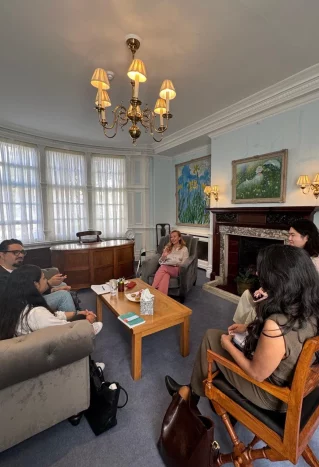
In September 2024, I founded the Therapy Talent Hub as part of London Trusted Therapy- an international mentoring programme for emerging psychotherapists. The Hub provides:
- High-quality clinical placements with real client work
- In-house supervision and mentoring from experienced practitioners
- Professional development support and career guidance
- A supportive community for newly qualified therapists
Our current cohort includes therapists from the UK, Hong Kong, India, and Iran, reflecting our commitment to nurturing diverse voices in the field. I personally supervise and mentor these clinicians, helping them develop the clinical judgment, ethical grounding, and reflective capacity essential for excellent therapeutic work.
The mental health crisis isn't just about access - it's about quality. We need more skilled, compassionate, well-supervised therapists, and the Talent Hub is my contribution to that need.
Therapeutic Approach & Modalities
My clinical practice is integrative, drawing on multiple evidence-based modalities tailored to each client's unique needs:
Psychoanalytic & Psychodynamic Therapy
Understanding how unconscious patterns, early attachment experiences, and unresolved conflicts shape present-day struggles.
This depth work helps clients understand not just what they're feeling, but why - and how to create lasting change.
Attachment-Focused Therapy
Working with attachment styles developed in early relationships and how they manifest in adult life - particularly in romantic partnerships, parenting, and patterns of self-regulation.
Existential Therapy
Exploring questions of meaning, purpose, freedom, and responsibility. This approach is particularly valuable for clients facing life transitions, identity crises, or the existential dimensions of anxiety and depression.
Neurodiversity-Affirmed Practice
As a neurodivergent clinician, I offer assessment (ADHD, ASD including ADOS-2 certification) and ongoing therapeutic support that celebrates neurological difference rather than pathologising it. My practice recognises that neurodivergent minds bring unique strengths and require approaches that honour different ways of thinking and being.
Cognitive Behavioural Therapy (CBT)
Evidence-based interventions for anxiety, depression, OCD, and other conditions where thought patterns and behavioural cycles maintain distress. I use CBT pragmatically, integrated with deeper relational and existential work.
Person-Centred & Humanistic Therapy
Rooted in Carl Rogers' principles of unconditional positive regard, empathy, and congruence. The therapeutic relationship itself becomes the vehicle for healing when clients experience being genuinely seen, heard, and accepted.
Trauma-Informed Practice
Understanding how trauma lives in the body and nervous system, not just in memory. My approach recognises that trauma isn't just what happened to you, but what you had to do to survive it - and focuses on creating safety, restoring regulation, and reclaiming agency.
© Dr. Olena Edwards-Skadowska
powered by WebHealer